

Shortwave infrared (SWIR) cameras have become a standard tool across a wide range of industries, valued for their ability to detect material properties, surface conditions, and subsurface features that other imaging systems miss. The specific characteristics of the SWIR band make it well-suited for certain measurement and inspection challenges, and the applications below illustrate where these cameras consistently deliver results that visible light and longer-wave infrared systems cannot match.
Solar Panel and Semiconductor Inspection
Silicon transparency in the SWIR range makes these cameras a natural fit for inspecting solar panels and semiconductor devices. SWIR imaging detects microcracks, shunts, and internal structure defects on the surface of silicon wafers and photovoltaic panels without contact or destructive testing. This kind of subsurface visibility is difficult to achieve with any other imaging approach, and it supports yield improvements and field reliability in solar manufacturing at production-line speeds.
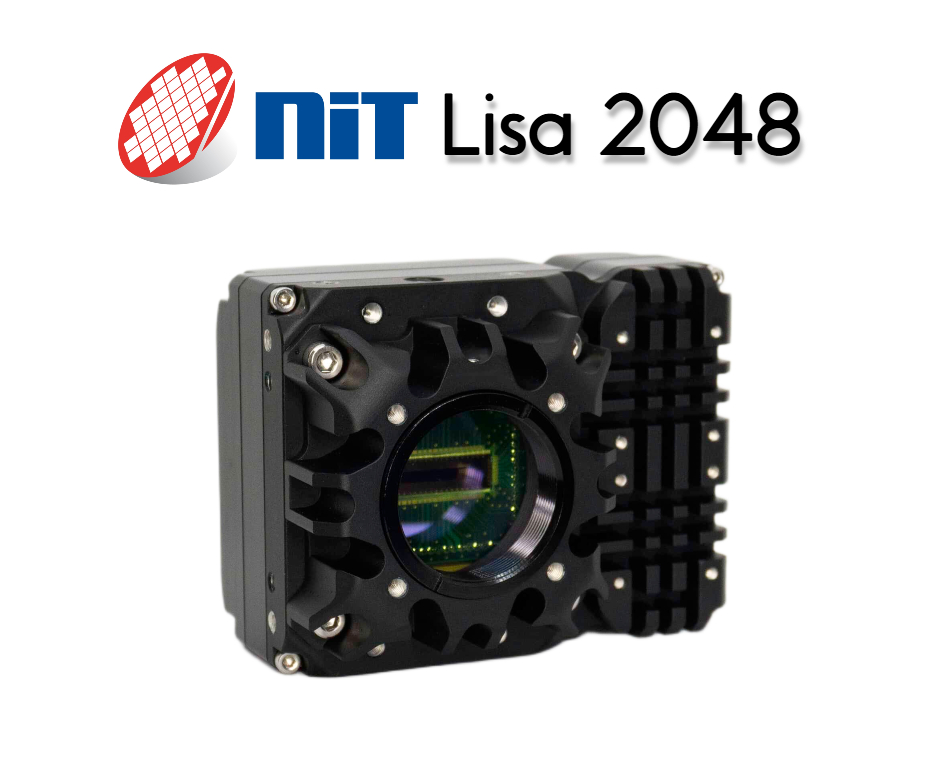
For high-throughput inspection on a production line, the NIT LiSa SWIR 2048 Line Scan camera is well-suited to this application. Its 2048-pixel single-row InGaAs sensor operates at up to 110,000 Hz through a CameraLink interface, with embedded non-uniformity correction and bad pixel replacement built in. The line scan format pairs naturally with conveyor-based inspection systems where panels or wafers move continuously past the camera, delivering a wide field of view across the full width of the product being inspected.
Food Sorting and Agricultural Inspection
Water absorbs strongly in the shortwave infrared range, which gives SWIR cameras a sensitivity to moisture distribution that makes them effective for food and agricultural inspection. Production lines use these systems to:
- Detect bruising and internal damage in fruit before it reaches packaging
- Identify foreign materials or contaminants in processed food products
- Measure moisture content in grains, seeds, and dried products
- Grade produce based on internal quality rather than surface appearance
The LiSa SWIR 2048 is also used in food sorting applications for the same reasons it performs well in semiconductor inspection. Its line scan architecture and high frame rate support continuous inspection of products moving at production speed, and the 900 to 1,700 nm spectral range covers the moisture absorption features that make SWIR effective for food analysis.
Defense, Surveillance, and Security Imaging
SWIR cameras are well established in defense and security applications, particularly for low-light and nighttime imaging. These cameras detect reflected shortwave infrared radiation from natural sources, as well as from dedicated SWIR illuminators that remain invisible to the unaided eye. This makes them effective for covert surveillance, target identification, and laser spot detection, since many designators and range finders operate within the near-infrared and SWIR bands.
The NIT SenS 1920 SWIR camera addresses applications in intelligence, surveillance, and reconnaissance where full HD resolution matters. Its 1920 x 1080 InGaAs sensor with an 8μm pixel pitch delivers 2-megapixel resolution at up to 60 Hz, with ultra-low readout noise of 25e- and a quantum efficiency greater than 80%. The TE-cooled sensor and compact 58 x 58 x 70 mm housing make it practical for integration into surveillance platforms, and the USB 3.0 and CameraLink interfaces support both laboratory and field deployments.
Pharmaceutical and Chemical Analysis
Many organic compounds have characteristic absorption features in the SWIR band, which makes these cameras useful for verifying chemical composition and ingredient distribution without destructive testing. In tablet inspection, SWIR imaging confirms even distribution of active pharmaceutical ingredients across a tablet surface in real time on a production line.
When paired with hyperspectral imaging, SWIR cameras extend this capability further. Hyperspectral SWIR systems capture continuous spectral data across the full shortwave infrared range, enabling precise compound identification and mixture analysis used in both laboratory research and in-line manufacturing quality control, where regulatory requirements demand thorough documentation of product consistency.
High-Speed SWIR Imaging for Research and Dynamic Events
Some applications require SWIR imaging at frame rates far beyond what standard cameras can provide. Combustion analysis, explosive liquid precursor detection, and fast material transitions all benefit from the ability to capture shortwave infrared data at high speed without compromising image quality.
The Telops FAST S1K is built for exactly this type of application. Its 640 x 512 InGaAs sensor reaches 1,000 Hz at full resolution and up to 103,000 Hz in subwindow mode, with a minimum integration time of 1μs and readout noise as low as 250e- in high gain mode. The camera supports optional temperature calibration between 300°C and 700°C for radiometric measurement of hot targets and operates in RAW, NUC, TEMP, and RADIANCE modes. Real-time data output, automatic exposure control, and a motorized filter wheel add to its flexibility across research and industrial applications. Telops Reveal IR software supports MATLAB and Python integration for teams building custom analysis workflows.
Laser Beam Profiling and Fiber Optic Inspection
Telecom lasers, fiber lasers, and other near-infrared sources require cameras capable of imaging beyond the visible range. SWIR cameras are the standard tool for profiling these beams and characterizing their spatial and intensity distributions. Fiber optic inspection is a related application where SWIR imaging detects defects, contamination, and alignment issues in fiber assemblies and connectors during production and quality assurance.
Machine Vision in Challenging Environments
In machine vision, SWIR cameras perform where visible light systems struggle. Some materials that appear visually similar in visible light show clear contrast differences in the SWIR band, making it easier to distinguish between plastic types, coatings, or surface treatments on a production line. SWIR imaging is also less susceptible to certain types of surface glare and scattering, which improves consistency in high-throughput inspection environments.
Selecting the Right SWIR Camera
Matching a SWIR camera to a specific application depends on several factors that affect detection capability and system integration:
- Sensor format: Area scan cameras like the SenS 1920 suit snapshot and surveillance applications; line scan cameras like the LiSa SWIR 2048 suit continuous web or conveyor inspection
- Frame rate: Dynamic events and research applications may require the high-speed capability of a system like the Telops FAST S1K
- Cooling: TE-cooled detectors reduce noise for precision measurement; uncooled options suit applications where size and power are the priority
- Interface: CameraLink for high-throughput industrial systems; GigE or USB 3.0 for lab and field deployments
Your Premier Source for High-Speed Imaging, SWIR Cameras & Thermal Imaging Cameras
Tech Imaging carries SWIR camera systems suited for research, industrial inspection, defense, and life science applications. If you are evaluating options for your next project, our team can help match the right system to your requirements. Call 800-613-8180 or contact us online to speak with one of our representatives.